
Kind words and sincere praise are among the most powerful educational tools that teachers and parents possess to open pathways of success for learners. Using encouragement phrases for students is not merely a passing compliment; it is an educational investment that contributes to building self-confidence, reinforcing positive behaviors, and transforming learning from a burden into an enjoyable, motivating journey.
The Importance of Encouragement Phrases for Students in Improving Performance
The impact of encouragement phrases for students extends far beyond putting a smile on their faces; it serves as a cornerstone in building an integrated educational and psychological system for the learner. Continuous appreciation and genuine praise transform the learning environment from a passive space for receiving information into an interactive ecosystem that encourages creativity and exploration. Its pivotal importance manifests in the following points:
- Boosting Intrinsic Motivation and Inner Passion: Positive reinforcement makes students feel that their efforts are recognized and valued by their teachers. This generates an internal desire to learn and achieve rather than relying on fear of punishment or external pressures, turning the pursuit of success into a renewed passion for accomplishment.
- Consolidating Commendable Academic Behaviors: Behavioral change relies on the principle of reward and impact. When a student receives immediate praise for an organized notebook, discipline, or active participation, their mind stores a positive association that encourages continuity, prompting them to repeat these constructive behaviors until they become ingrained habits.
- Reducing Test Anxiety and School Apprehension: Encouraging and supportive phrases create a psychologically safe classroom environment, reducing the fear of making mistakes or facing criticism. This psychological safety empowers students to participate, express their ideas freely, and ask questions without hesitation, elevating their self-confidence and facilitating comprehension.
- Developing Higher-Order Thinking Skills and Innovation: When students believe in their abilities through motivational words, their academic aspirations rise. Instead of settling for rote memorization, they strive to analyze, research, and devise innovative solutions to academic challenges, sharpening
their critical thinking skills and molding them into leaders in their fields.
encouragement phrases for students
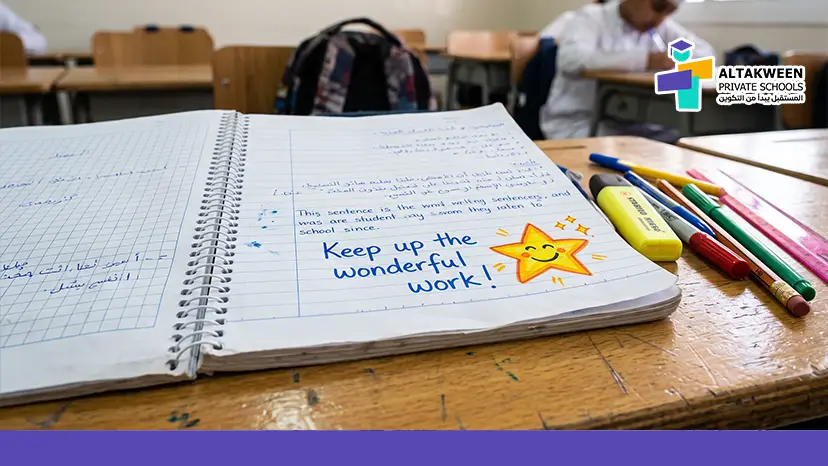
Motivational Comments for Student Notebooks and Assessment Notes
Leaving a positive impression on the pages of students’ notebooks deepens their engagement with the subject. Here are excellent examples of motivational comments for student notebooks:
- “Beautiful handwriting and organized steps… This is what a creator’s notebook looks like!”
- “An excellent, intelligent answer that demonstrates your deep understanding. Well done, hero!”
- “The neatness and cleanliness of your notebook reflect your excellence and dedication. May your efforts be blessed.”
- “You solved this problem brilliantly! Keep up this outstanding performance.”
- “Great notes, and your handwriting is a joy to read. Thank you for your hard work!”
encouragement phrases for students
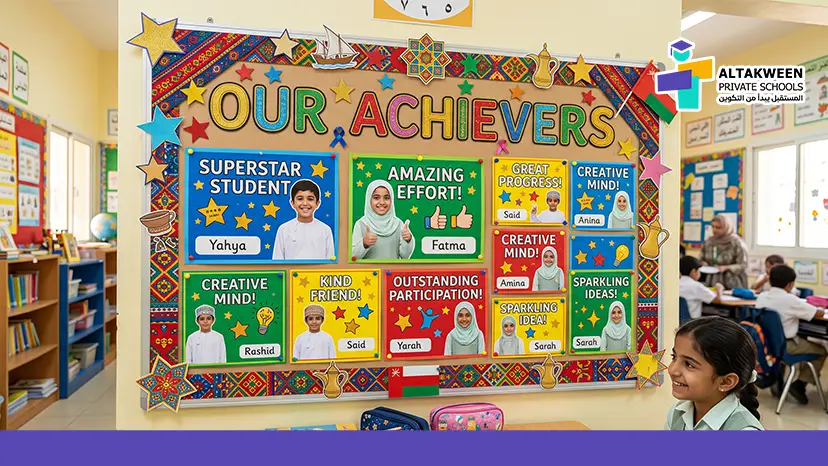
Inspirational Words for Top Achievers in Certificates and Honor Rolls
Top achievers require inspiring words that reflect their excellence and match their high standards. Here is a selection of inspirational words for top achievers, tailored for honor roll and certificate quotes:
- Honor Roll Citation: “To an exceptional student: We are proud of your brilliant success and see a bright future scholar in you.”
- Certificate Quote: “Deservedly awarded, this certificate goes to a student who settles for nothing less than the top.”
- Academic Distinction: “To the star of the class and symbol of dedication: Congratulations on this distinction, and wishing you continued brilliance and success.”
- Leadership & Passion: “You turned challenges into triumphs through your passion and determination; congratulations on making the honor roll!”
- Enduring Impact: “This certificate is adorned with your name, just as the honor roll is brightened by your enduring impact and continuous excellence.”
Behavioral and Academic Praise Phrases to Promote Classroom Discipline
True learning begins with behavioral discipline and a spirit of cooperation. Utilizing targeted behavioral and academic praise phrases helps elevate both conduct and performance within the classroom environment:
- For Cooperation and Participation: “Helping your classmates with a warm spirit makes you a true leader and an exemplary peer.”
- For Discipline and Quietness: “Your respect for classroom rules and attentive listening reflect your high character and early maturity.”
- For Initiative and Courage: “Thank you for taking the initiative to answer and participate interactively; your intellectual courage inspires everyone.”
- For Neatness and Responsibility: “Your care for keeping your area clean and your tools organized shows a refined and responsible personality.”
Encouraging Phrases for Underperforming Students to Help Them Rise
Students facing learning difficulties or academic setbacks need words that restore hope and highlight tangible progress, no matter how small:
- “Your earnest effort today is the first step toward your excellence tomorrow; I truly believe in your ability to grow.”
- “I noticed a wonderful improvement in your work compared to the previous assignment. Keep going with this same determination!”
- “Making a mistake is not the end of the road, but the beginning of real learning. Your courage to try makes me very proud.”
- “You have great potential waiting to be unleashed. Step by step, you will reach your goals.”
Encouragement Phrases for Early Childhood and Primary Grades (Kindergarten & Lower Elementary)
Younger age groups require vibrant, simple, and visual phrases that engage their vivid imaginations and foster a love for school:
- “To the hero of the class! Your drawing and answer shine like the stars.”
- “You are a creative young calligrapher; your beautiful handwriting warms my heart!”
- “Thank you for organizing your toys and supplies; you are a responsible and wonderful child.”
- “Well done! Your answer is fantastic and deserves the brightest golden star.”
Best Times and Methods to Deliver Encouragement Phrases for Students
The value of reinforcement depends not only on the words chosen, but also significantly on timing and delivery to ensure maximum educational impact:
- Immediacy in Appreciation: The impact of encouragement phrases for students is most effective when offered immediately after the positive behavior or task completion, connecting the action directly to the moral reward in the student’s mind.
- Combining Written and Verbal Praise: Blending direct verbal praise in front of peers to build confidence with motivational comments for student notebooks creates lasting memories that students can revisit.
- Focusing on Effort Rather Than Intelligence Alone: Praising effort, perseverance, and organization rather than labeling innate intelligence fosters a Growth Mindset, encouraging students to keep trying and improving.
The Role of Positive Reinforcement in Strengthening Home-School Relations
When words of praise reach beyond classroom walls to parents, their positive impact on the student’s behavior and performance multiplies:
- Sending Notes of Appreciation Home: Writing a short positive note in the communication book (e.g., “Thank you for your wonderful support; your child showed remarkable behavioral and academic excellence this week”) builds a bridge of trust between teachers and families.
- Unifying Educational Efforts: Mutual reinforcement gives students a sense of being surrounded by a supportive, caring team, providing psychological security and motivating them to give their best.
encouragement phrases for students

Frequently Asked Questions about encouragement phrases for students
What is the psychological impact of encouragement phrases on students?
Motivational phrases leave a deep, direct impact on a student’s character and mindset. Their most prominent effects include building self-confidence, developing a Growth Mindset, relieving performance anxiety, and transforming learning into a personal desire for achievement and distinction.
How does a teacher choose the right praise phrases for each academic level?
For early stages, use simple, concrete phrases paired with visual rewards (such as stickers). For middle and high school students, focus on behavioral and academic praise phrases that acknowledge critical thinking, initiative, and character. For high achievers, utilize inspirational words for top achievers and honor roll and certificate quotes that challenge their potential.
How do encouragement phrases improve the performance of underperforming students?
Reinforcement phrases create a fundamental shift in the mindset of underperforming students by breaking the cycle of frustration and fear of failure. When praise focuses on incremental progress and genuine effort rather than solely on final scores, it reshapes the student’s perception of their abilities, fostering a Growth Mindset that motivates them to keep trying and overcome learning challenges.
Is there a difference between praising a student’s effort versus praising their intelligence?
Yes, there is a significant educational difference. Research shows that praising effort, strategy, and perseverance instills a Growth Mindset, helping students understand that excellence is built through continuous practice and hard work. Conversely, praising innate intelligence can make students risk-averse, leading them to avoid difficult academic challenges out of fear of losing the “smart” label.
How can educators avoid overusing motivational phrases so they do not lose their impact?
Praise loses its value when it is exaggerated, generic, or unearned. To maintain its educational effectiveness, reinforcement should be authentic, timely, and specific to a clear behavior or accomplishment (e.g., praising the neatness of step-by-step problem-solving rather than giving a vague “you are amazing”).
What is the difference between verbal encouragement and written comments in notebooks?
Verbal encouragement provides immediate public recognition, building a student’s self-esteem and social confidence among their peers in the classroom. Written comments in notebooks or certificates, on the other hand, offer lasting value—serving as a tangible reminder that students and parents can revisit whenever they need a boost of motivation and positivity.