
Benefits of modern education for children are vast. Starting from the kindergarten stage, it prepares kids for real-world challenges; read on to learn more.
Definition and benefits of modern education for children
Modern Education is a learner-centered approach that highlights the core benefits of modern education for children by prioritizing understanding, analysis, and the practical application of knowledge. Unlike legacy systems, it utilizes Modern Teaching Methods that treat the child as an active participant in the classroom. It is a dynamic process that integrates technology and psychology to deliver a personalized learning experience tailored to each child’s unique needs.
The importance of modern education in developing children’s skills
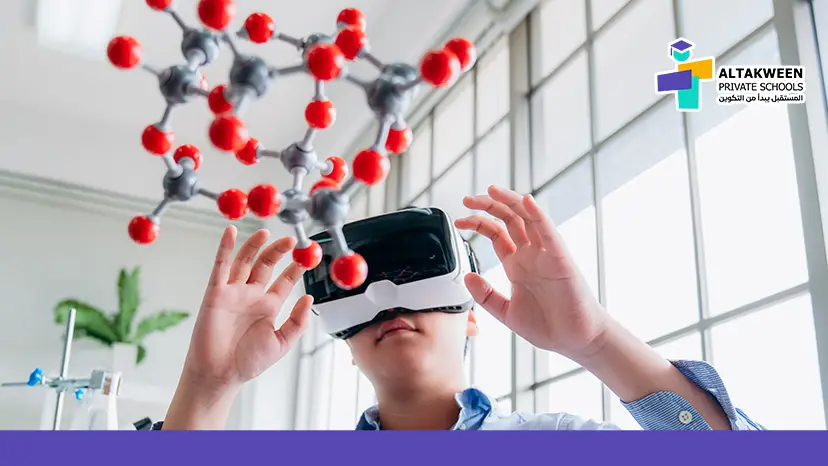
The primary goal of the current educational shift is Developing Children’s Skills beyond the traditional academic curriculum, ensuring they are equipped for a multidimensional world. Rather than just accumulating information, modern education focuses on:
- Cognitive Skills: This involves strengthening the mental foundations of learning. By enhancing memory, attention, and logic, students learn how to process complex information efficiently and maintain focus in an increasingly distracted world.
- Practical Skills: Modern pedagogy bridges the gap between theory and reality. Through hands-on learning and project-based assignments, children apply classroom concepts to tangible tasks, fostering a sense of accomplishment and a deeper understanding of “how things work.”
- Digital Literacy: In an era defined by technology, Digital Education is no longer optional. This focus goes beyond basic computer usage; it is about preparing children to navigate the digital landscape with a sense of safety, ethics, and effectiveness, turning them into responsible digital citizens.
- Adaptability and Resilience: By tackling diverse challenges, students develop the flexibility to adapt to new situations, ensuring that their skill set remains relevant regardless of future technological or social shifts.
How does modern education help develop creative thinking?
Creativity is the cornerstone of innovation, and modern pedagogy is specifically designed to unlock this potential. One of the most significant Benefits of modern education for children is the transition from rigid instruction to flexible exploration through the following points:
- Encouraging Divergent Thinking:
Unlike traditional methods that seek a single “right” answer, modern teaching encourages students to look at problems from multiple perspectives, teaching them that there are often several valid solutions to a single challenge.
- Utilizing Open-Ended Inquiry:
Teachers provide open-ended questions and scenarios that allow children to explore, imagine, and innovate. This approach stimulates curiosity and prompts students to investigate “why” and “how” rather than just “what.”
- Providing Freedom to Experiment:
A key element is the “freedom to fail” in a supportive environment. By treating mistakes as learning opportunities, modern education gives children the confidence to think outside the box and try unconventional ideas without fear of judgment.
- Integrating Interdisciplinary Learning:
By connecting different subjects—such as art with science or math with music—modern education helps children see unique patterns and relationships, which is the heart of creative breakthrough and holistic innovation.
The role of modern education in enhancing problem-solving skills
By moving away from theoretical teaching to task-based learning, the benefits of modern education for children become clear as they are constantly challenged to find solutions to real-world scenarios. This builds resilience and analytical prowess. When children are taught how to deconstruct complex issues, they gain the confidence to tackle challenges in both their academic and personal lives.
To support early literacy, explore our guide on Developing children’s reading and writing skills.
The impact of technology on modern teaching methods
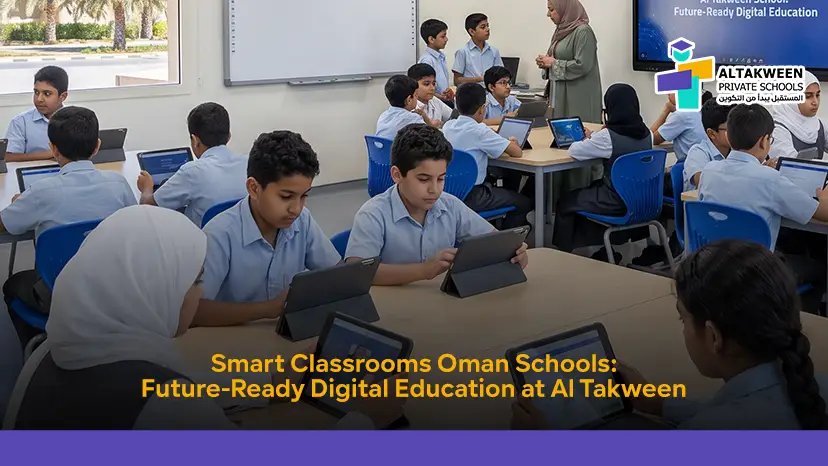
The integration of Digital Education has revolutionized the classroom, moving it beyond physical boundaries and traditional textbooks. Technology acts as a powerful catalyst that transforms the learning experience through:
- Personalized Learning Pathways: Using AI-driven adaptive software, education is tailored to each student’s unique pace. This ensures that gifted students remain challenged while those who need more time can master concepts without feeling left behind.
- Global Access to Knowledge: Technology provides the ability to learn from experts and access premium resources worldwide. Whether through virtual field trips or international collaborations, the world becomes a boundaryless classroom.
- Enhanced Visual Engagement: Tools like 3D simulations, Virtual Reality (VR), and Augmented Reality (AR) make complex, abstract subjects—such as molecular biology or planetary physics—tangible and much easier to grasp.
- Real-Time Data and Feedback: Modern teaching methods utilize digital assessment tools that provide immediate feedback. This allows educators to identify learning gaps instantly and adjust their teaching strategies to support student success in real-time.
- Fostering Tech-Fluency: By interacting with digital platforms daily, children develop a natural proficiency with technology. This goes beyond entertainment, teaching them how to use digital tools for research, creation, and professional problem-solving.
How does modern education contribute to building a child’s personality?
Beyond academics, modern education acts as a platform for character building, focusing on the psychological and emotional growth of the student. This approach ensures the child grows into a well-rounded individual through several key aspects:
- Cultivating Self-Reliance and Independence: Modern classrooms encourage students to take ownership of their learning. By managing projects and making choices, children develop a sense of responsibility and the ability to rely on their own skills to achieve goals.
- Developing Leadership and Initiative: Through collaborative group work and peer-led activities, students learn how to lead, inspire others, and take initiative. These experiences build the courage needed to step into leadership roles in the future.
- Fostering Emotional Intelligence (EQ): Modern pedagogy places a high value on self-awareness and empathy. By teaching children how to understand and manage their emotions—and respect the emotions of others—it builds strong interpersonal foundations.
- Building Confidence Through Respect: By fostering an environment where students feel heard and respected, schools help build a strong sense of self. When a child’s ideas are valued, their self-esteem grows, allowing them to express themselves with confidence.
- Promoting Resilience and Adaptability: In a dynamic learning environment, children are taught that challenges are part of the growth process. This mindset helps them handle setbacks with resilience, turning obstacles into opportunities for personal development.
Discover the best educational options in the Sultanate by reading about Bilingual schools in Oman.
The role of interactive education in improving understanding and comprehension
Interactive Education for Children highlights the benefits of modern education for children by transforming the learning experience from passive listening to active engagement, ensuring that knowledge is not just received, but fully internalized. This approach improves comprehension through several key mechanisms:
- Active Knowledge Construction: Instead of memorizing facts, children “build” their understanding. When students engage in group discussions and collaborative projects, they process information more deeply by explaining concepts to their peers and debating different viewpoints.
- Enhanced Information Retention: Studies show that we retain more information when we “do” rather than just “hear.” Through educational games and simulations, learning becomes a lived experience, which helps move information from short-term to long-term memory.
- Multi-Sensory Engagement: Interactive education often involves visual, auditory, and kinesthetic elements. This multi-sensory approach caters to different learning styles, ensuring that every child can grasp complex subjects in the way that suits them best.
- Immediate Feedback Loops: In an interactive setting, teachers and digital tools provide instant feedback. This allows children to correct misunderstandings on the spot, preventing the formation of “learning gaps” and ensuring a solid foundation for future topics.
- Increased Motivation and Focus: Interactivity makes learning enjoyable. By turning a lesson into a challenge or a social interaction, students remain engaged for longer periods, which naturally leads to higher levels of focus and academic achievement.
If you are seeking academic excellence, find out how to choose the Best private school for primary school.
The importance of modern education in developing social skills
In the modern classroom, collaboration is the cornerstone of the learning experience. This environment acts as a social laboratory where children develop interpersonal traits that are indispensable in both life and the modern workforce through the following points:
- Cultivating Teamwork and Cooperation:
By working in teams to complete projects, students learn how to delegate tasks, accept collective responsibility, and appreciate how diverse contributions lead to a unified goal.
- Developing Effective Communication:
Through participation in debates and peer presentations, children practice articulating their thoughts clearly, expressing their opinions with confidence, and using persuasive language effectively.
- Mastering Active Listening:
Modern pedagogy emphasizes peer-to-peer engagement, which teaches children the importance of listening intently to understand their classmates’ perspectives before responding—a vital skill for building mutual understanding.
- Fostering Empathy and Emotional Intelligence:
Constant interaction with peers from diverse backgrounds helps children understand different feelings and respect cultural differences, creating a supportive environment rooted in mutual respect.
- Conflict Resolution and Negotiation:
Group activities provide natural opportunities for differing viewpoints to emerge. Modern education teaches children how to navigate these disagreements, helping them learn how to negotiate and resolve social conflicts rationally and flexibly.
- Building Leadership and Influence:
Interactive learning allows students to take on leadership roles, helping them develop the ability to guide others, provide constructive feedback, and exert a positive influence on their surroundings.
The difference between modern and traditional education for children
Feature | Traditional Education | Modern Education |
Core Focus | Teacher-centered: The teacher is the sole source of knowledge and authority. | Student-centered: The curriculum revolves around the student’s needs, interests, and pace. |
Learning Method | Memorization & Theory: Heavy reliance on rote learning and abstract theoretical concepts. | Understanding & Application: Focuses on “learning by doing” and applying concepts to real-world scenarios. |
Technology Use | Limited/None: Reliance on textbooks, chalkboards, and physical paper. | Integrated (Digital Education): Use of AI, tablets, interactive screens, and global digital resources. |
Student Role | Passive Listener: Students are expected to sit, listen, and absorb information quietly. | Active Participant: Students engage in discussions, lead projects, and ask “why.” |
Skill Set | Academic Focus: Success is measured by exam scores and mastery of core subjects. | Holistic Skill Development: Focuses on EQ, social skills, digital literacy, and critical thinking. |
Assessment | Standardized Testing: High-stakes exams are the primary measure of progress. | Continuous Feedback: Ongoing assessment through projects, portfolios, and self-reflection. |
Stay involved in your child’s journey by learning: How do I monitor my child’s academic progress?
Why has modern education become a necessity for children’s future?
The shift toward modern pedagogy reflects the true benefits of modern education for children, serving as a direct response to a global transformation in how we live and work. The survival kit for the 21st century requires more than just academic knowledge—it requires a dynamic mindset. Here is why modern education is now a fundamental necessity:
- Preparing for an Evolving Job Market: Many of the jobs children will hold in the next decade do not exist yet. Modern education focuses on transferable skills—like critical thinking and technological proficiency—that remain relevant even as specific industries change or become automated.
- The “Learn How to Learn” Philosophy: In the past, education had a “finish line.” Today, the heart of modern teaching is instilling a growth mindset. By teaching children how to research, analyze, and master new subjects independently, they are prepared for a lifetime of continuous learning.
- Navigating the Digital Economy: With the rise of AI and global connectivity, Digital Education is the new literacy. Modern education ensures children aren’t just consumers of technology, but creators and problem-solvers who can navigate digital spaces safely and ethically.
- Adaptability in a Fast-Paced World: Traditional schooling often rewards rigid adherence to rules. In contrast, modern methods prioritize adaptability. Children learn to pivot when faced with new information, a trait that will define their success in high-pressure, rapidly changing professional environments.
- Bridging the Global Skills Gap: As industries become more interconnected, the ability to collaborate across cultures and utilize complex data is vital. Modern education provides the social and analytical tools necessary to thrive in a globalized economy.
In short: Traditional education was designed for the industrial age—to produce workers who could follow instructions. Modern education is designed for the information age—to produce thinkers who can lead, innovate, and adapt to whatever the future holds.
Investing in modern education is an investment in a child’s ability to lead, innovate, and adapt. By embracing Modern Teaching Methods and Digital Education, we are not just teaching children facts; we are building their future.
Why are Altakween Schools the Ideal Choice for Modern Education?
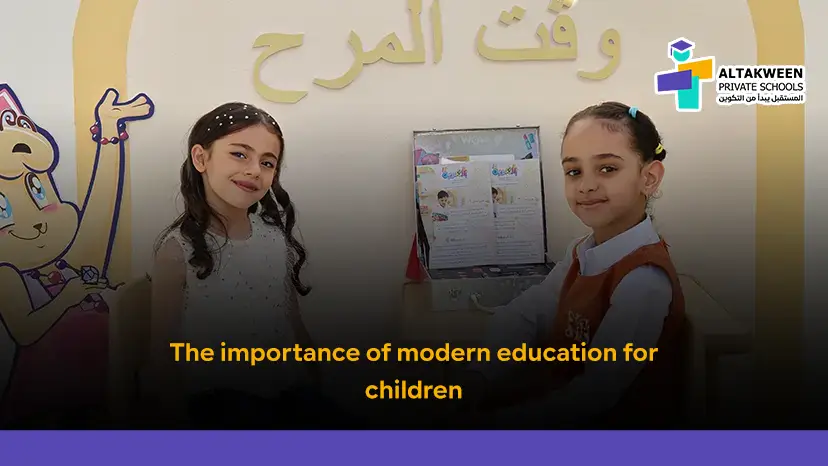
Altakween Schools serves as a leading model for the modern educational concepts discussed in this article. We transform theory into a daily reality for students through:
- Integrated Modern Curriculum: We adopt an advanced curriculum that bridges the gap between academic excellence and essential life skills, ensuring students reap the full benefits of modern education.
- Technology-Driven Learning: Starting from kindergarten, our students are immersed in a digital-rich environment where technology is used as a tool for research, analysis, and creative problem-solving.
- Holistic Character Building: Our focus extends beyond grades. We nurture the “whole child” by integrating emotional intelligence, leadership training, and social ethics into the daily learning flow.
- Active & Interactive Environment: Our state-of-the-art facilities are designed to encourage exploration. This hands-on approach makes Altakween a top contender for the best private school for primary school education.
- Individualized Learning Paths: We recognize that every child is unique. Our educators tailor their approach to suit different learning styles, ensuring that no student is left behind and every talent is discovered.
Don’t just give your child an education; give them a future.
Enroll your child at Altakween Schools today and provide them with a modern learning environment that builds essential 21st-century skills.
FAQ about Benefits of modern education for children
What is modern education for children?
Modern education is a student-centered approach that moves away from traditional rote memorization. It focuses on active learning, where children are encouraged to research, ask “why,” and apply knowledge to real-life situations. It integrates technology, psychological insights, and interactive methods to develop the child as a whole—intellectually, socially, and emotionally.
What are the most prominent benefits of modern education for children?
The Benefits of modern education for children are vast, but the most prominent include:
- Skill Development: Focusing on critical thinking, problem-solving, and digital literacy.
- Personalization: Tailoring the learning experience to match each child’s unique pace and interests.
- Engagement: Making learning enjoyable through interactive and digital tools, which leads to better information retention.
- Future Readiness: Equipping children with the adaptability needed for the 21st-century job market.
How does modern education help develop creativity?
Modern education views creativity as a skill that can be nurtured, not just a talent. It achieves this by:
- Open-Ended Learning: Giving students projects that have multiple correct solutions.
- Safe Exploration: Creating an environment where “trial and error” is encouraged, and mistakes are seen as learning steps.
- Interdisciplinary Projects: Combining subjects like art and science to help children see unique connections and think outside the box.
What is the difference between modern education and traditional education?
The main difference lies in the role of the student and the source of knowledge:
- Traditional Education: Is “teacher-centered,” focusing on passive listening, memorization, and standardized testing. The teacher is the sole authority.
- Modern Education: Is “student-centered,” focusing on interaction, critical analysis, and practical application. The teacher acts as a facilitator or guide rather than a lecturer.
Is modern education suitable for all age groups?
Yes, absolutely. Modern education is a philosophy rather than a fixed set of rules, making it adaptable for all ages:
- Early Childhood: Focuses on “learning through play” and sensory exploration.
- Primary Education: Focuses on building foundational skills through interactive and collaborative projects.
- Secondary/Higher Education: Focuses on independent research, specialized tech-skills, and preparing for professional life. The methods change as the child grows, but the core principle—active, student-led learning—remains the same.
اقرأ أيضًا: مدرسة تبارك الخاصة